What Are the 3 Things That Both Light and Sound Waves Can Be Measured With?
Physics is a specific expanse of study in the field of science that focuses on the makeup and properties of both energy and matter, as well as how the two interact together. Some of the forms of matter and energy that are covered in physics include electricity, radiation, atoms and estrus. All of these terms and topics can brand learning about physics seem complicated. There are theories and principles to study and experiments to deport. All of the information tin be understandably overwhelming, especially for kids. The easiest way to begin to empathise physics, however, is to simply brainstorm with the basics. Two of the nigh basic and significant matters in physics are the study of light and sound. A lot of more than avant-garde principles and studies in the realm of physics lead back to full general knowledge nearly the way both of these function. One of the nearly important facts to understand about both light and sound is that both are forms of energy that motion in waves. While they are both forms of energy that travel in the form of waves, there are vital differences betwixt audio waves and light waves.
- Sound Waves vs. Light Waves
- Audio and Low-cal
- Q & A: Speed of Sound and Light
- The Characteristics of Sound and Light Waves
- The 6 Forms of Energy
- Light & Sound
- Waves: Audio and Lite
- Physics for Kids
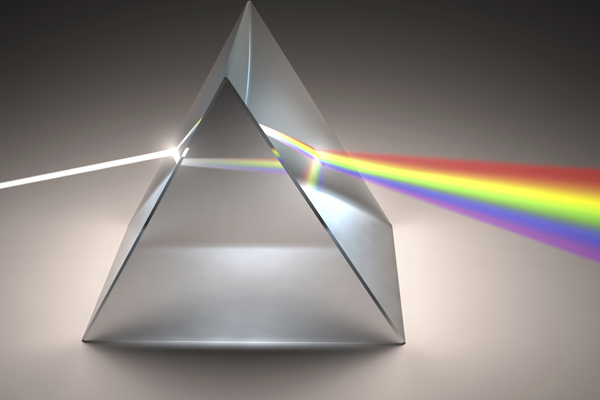
Audio and low-cal travel at significantly different speeds. Lite waves motility at speeds that are most one million times faster than audio waves are capable of traveling. Light waves are capable of moving through empty infinite at speeds of effectually 186,000 miles (or 299,792,458 meters) per second. This is faster than most humans can even begin to cover. This is also the reason behind the expression, "faster than the speed of light." In the field of physics, the term "light" is usually used to refer to electromagnetic radiations; notwithstanding, there are diverse other types of calorie-free. Other forms of lite include infrared light, ultraviolet low-cal and light that is visible to humans, known as visible calorie-free. Each type of light has different wave length frequencies, some being high and some being depression. The frequency of the light determines if it is detectable by the human being eye, although humans are capable of seeing dissimilar types of wave lengths than other species. Insects such as bees and spiders, for instance, are capable of viewing ultraviolet light, while reptiles similar snakes can view some infrared lights. Some mammals, like monkeys, are capable of seeing the same light every bit humans. Others, like dogs, see similar calorie-free but view fewer colors that are a lot dimmer than humans perceive them to be. Dogs often perceive light and colors as a dull yellow, blueish or grey. The master key to agreement lite is in realizing that light is all around, in many forms, although humans are simply unable to view well-nigh types with their optics lonely.
- Light Scientific discipline Activities and Projects
- The Science of Light
- Physics for Fun: Calorie-free Unit (PDF)
- Common Misconceptions about Low-cal, Heat and the Dominicus
- The Basics of Light
- Lite Reflection and Refraction
- Visible Light Waves
- Albert Einstein'south Theory of Light
- The Speed of Low-cal

Sound waves are much dissimilar than calorie-free waves in the manner in which they travel. Sound waves move much slower than light waves at speeds of about 1,125 anxiety (almost 340 meters) per 2d. Audio waves are as well unlike in the sense that they travel through any type of substance, whether solid, liquid or gas, whereas calorie-free travels best through empty space. When audio waves hit materials, they cause vibrations. These vibrations are either high frequency or low frequency. Depression frequency sound waves produce low tones while high frequency waves create loftier-pitched tones. When the frequency of the sound waves changes, it creates a change of pitch in the sound that is heard past the homo ear. As with light waves, the level of sound moving ridge frequencies that tin can be perceived is dependent upon the capability of the species body. Humans are actually not among the greatest hearing species in the world. Man ears are just capable of hearing frequencies of about 20 kilohertz (a form of measuring frequencies), while the species that is known to accept the highest capability of hearing, the Greater Wax Moth, tin can hear frequencies of around 300 kHz. As with light waves, it is also important to retrieve that sound waves are everywhere, despite the fact that human ears are incapable of hearing many sounds.
- How Far Away Is That Storm?
- The Physics of Audio: How We Produce Sounds
- Refraction of Sound
- Measuring the Speed of Audio
- What is Sound?
- Audio Games
- Physics of Sound (PDF)
- Waves & Sounds (PDF)
- Introduction to Sound
- Sound: Science Facts
- Sound Moving ridge Videos
- Sound Quiz
- The Physics of Music: Using Light to Report Sound
Keeping in mind that energy, such every bit sound and light, exists without humans always beingness capable of seeing or hearing information technology is an excellent mindset to have when studying physics. Understanding the speed of calorie-free and sound, the mode they travel and how they both operate is vital cognition to have when information technology comes to pursuing more than complex subjects in physics such as radiation and atoms. Thinking about the limitations of the bodies of species besides leads to many other exciting opportunities for exploration. This bones knowledge of low-cal and sound is the first step in edifice a solid foundation in the field physics.
Source: https://www.boogeylights.com/physics-of-light-and-sound-for-kids/

Post a Comment for "What Are the 3 Things That Both Light and Sound Waves Can Be Measured With?"